
Flag of Israel: Design, Meaning, History & Symbolism

The Israeli Flag – A Symbol of Faith, Identity, and Nationhood
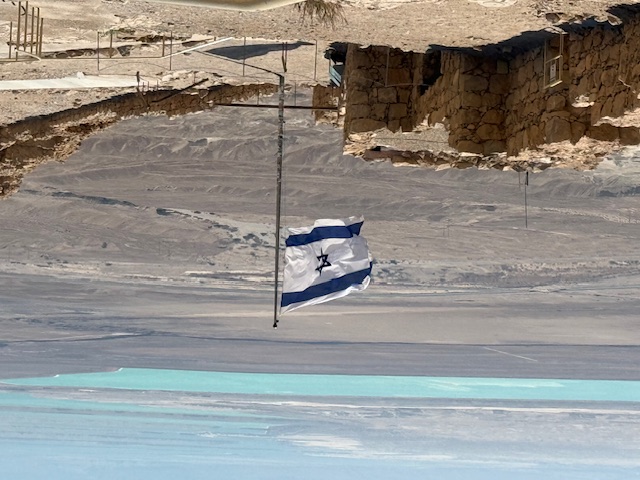
The Israeli flag is one of the most recognized national symbols in the world. With its bold blue and white colors and the central Star of David, the Israeli flag embodies the story of the Jewish people, their ancient faith, and their modern state. More than just a banner, the Israeli flag carries a message of unity, resilience, and connection to the Land of Israel. For travelers and visitors, learning about the Israeli flag offers a window into the nation’s history, identity, and spiritual heritage.
♦Adoption Date: October 28, 1948
♦Design: White field, two blue horizontal stripes, blue Star of David
♦Colors: Blue (Pantone 286) and White
♦Proportions:8:11 ratio
♦Designer: Based on David Wolffsohn's 1891 design
♦Inspiration: Jewish prayer shawl (Tallit)
Let's Learn about the Flag of Israel
- Origins of the Israeli flag and its Zionist roots
- When Was the Israeli Flag Adopted?
- What Do the Colors and Symbols Mean?
- Biblical and Religious Significance
- The Israeli flag in modern life and culture
- Fun facts about the Israeli flag
- The flag and Jewish identity worldwide
- Controversies and debates about the Israeli flag
- The Israeli flag in ceremonies, sports, and national events
- Global presence of the Israeli flag
- Visiting Israel to explore the story of the flag
- Frequently asked questions (FAQs) about the Israeli flag
Origins of the Israeli Flag and Its Zionist Roots
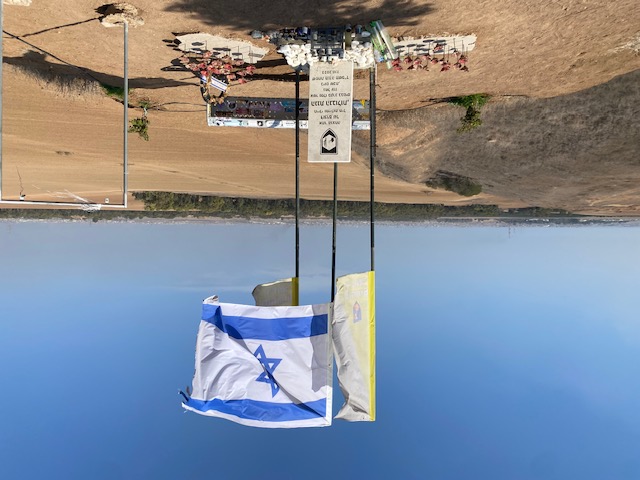
The Israeli flag traces its roots to the late 19th century, during the rise of the Zionist movement. At the First Zionist Congress in Basel, Switzerland, in 1897, the Jewish leaders adopted a design inspired by the Tallit (Jewish prayer shawl). The tallit is traditionally white with blue stripes, symbolizing purity, holiness, and connection to God.
The blue stripes on the Israeli flag represent this sacred garment, or the Rivers of Babylon, while the Star of David (Magen David) at the center became the ultimate emblem of Jewish identity. The design aimed to unite Jews worldwide under a single visual symbol, even before the establishment of the modern State of Israel.
When Was the Israeli Flag Adopted?
The State of Israel was declared on May 14, 1948, and only months later, on October 28, 1948, the Israeli flag was officially adopted as the national flag. Its approval represented not only political independence but also spiritual and cultural rebirth after centuries of exile.
The flag of Israel was chosen because it already served as the flag of the World Zionist Organization, and it had gained widespread recognition among Jewish communities worldwide. By adopting it, Israel emphasized the continuity between the ancient Jewish tradition, the Zionist movement, and the new nation-state.
What Do the Colors and Symbols of The Israel Flag Mean?
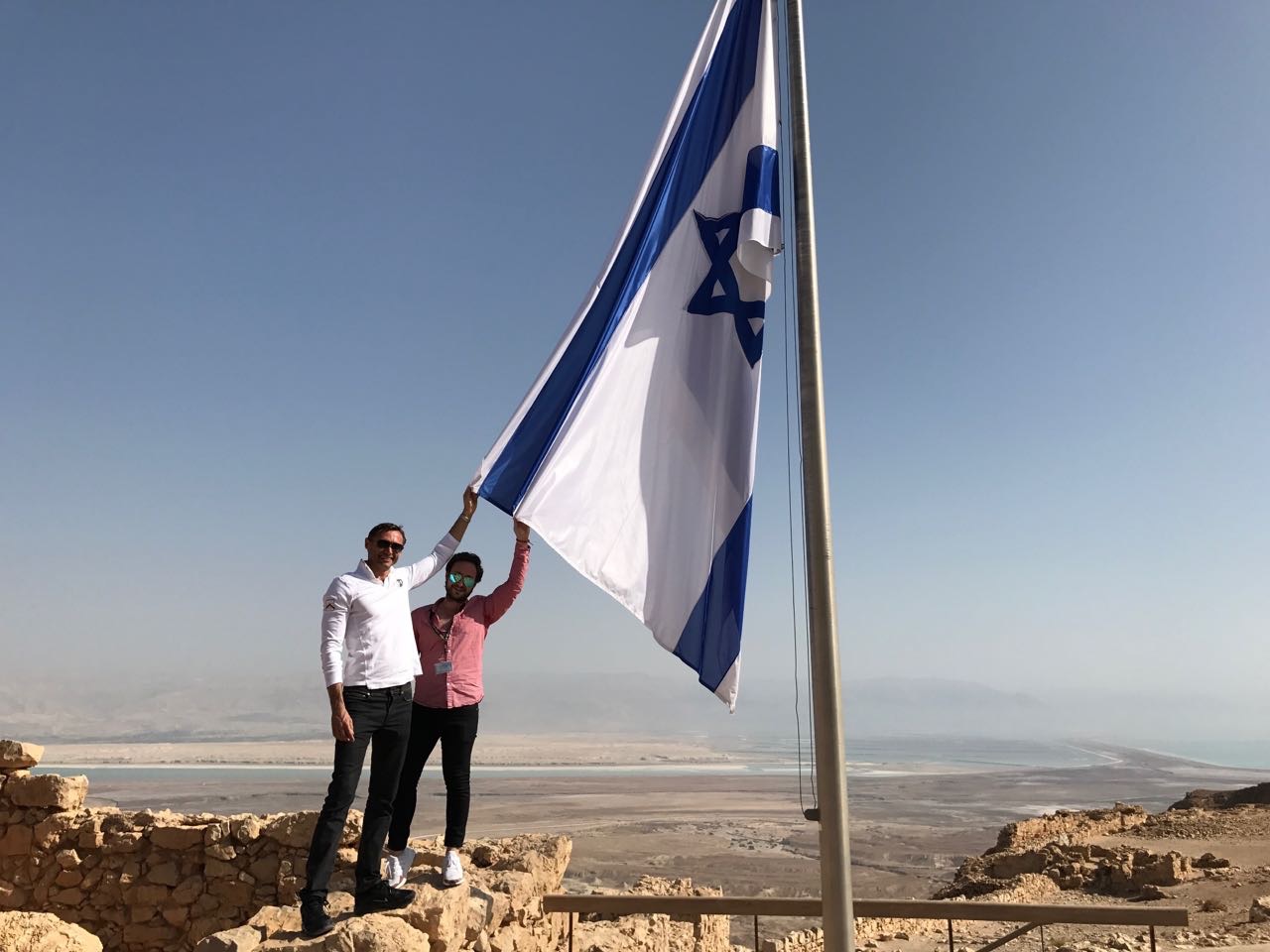
- White background: Symbolizes peace, purity, and holiness.
- Blue stripes: Represent the stripes of the tallit, reminding Jews of prayer, faith, and their covenant with God.
- Star of David: The six-pointed star is one of Judaism’s most enduring symbols, signifying Jewish identity and unity.
Some interpretations also suggest that the blue color symbolizes the biblical "Tchelet dye" (Numbers 15:38-40), which was commanded for use in Tzitzit (fringes on the Tallit). This sacred blue connects the Israeli flag to divine commandments and Jewish spiritual heritage.
Biblical and Religious Significance
The symbolism of the Israeli flag resonates with several biblical passages:
- Numbers 15:38-39: “Speak to the Israelites and say to them: Throughout the generations to come you are to make tassels on the corners of your garments, with a blue cord on each tassel.” This is often linked to the blue stripes of the flag.
- Psalm 137:1–6: "By the rivers of Babylon we sat and wept when we remembered Zion. This describes the longing of the Jewish people in exile for Jerusalem, echoed in the flag’s symbolism of return and hope.
- Isaiah 11:12: “He will raise a banner for the nations and gather the exiles of Israel.” The Israeli flag embodies this prophetic vision of return and unity.
The Israeli Flag in Modern Life and Culture

The Israeli flag is proudly displayed during Independence Day (Yom Ha’atzmaut), Jerusalem Day (Yom Yerushalayim), and on memorial days. It flies over the Knesset (Israeli Parliament), government offices, schools, and military bases.
Internationally, the Israeli flag is carried in Olympic Games, global sports competitions, and Jewish cultural events, symbolizing pride and resilience. For visitors touring Israel, the flag is visible on historic sites such as the Western Wall in Jerusalem, Masada, and throughout the Galilee.
👉 Learn more about visiting these places on a Jerusalem Private Tour.
Fun Facts About the Israeli Flag
- The largest Israeli flag ever made was unveiled at Masada, measuring 660m by 100m, weighing 5.7 tons( 2 football fields)
- The Israeli flag emoji (🇮🇱) is widely used worldwide on social media to show solidarity.
- El Al Airlines, Israel’s national carrier, incorporates the Israeli flag into its branding.
- During international events, many Jewish communities proudly wave the Israeli flag to show identity and support.
- The Israeli flag has flown in space—astronaut Ilan Ramon, the first Israeli in space, carried it on the Columbia mission in 2003.
The Israel Flag and Jewish Identity Worldwide
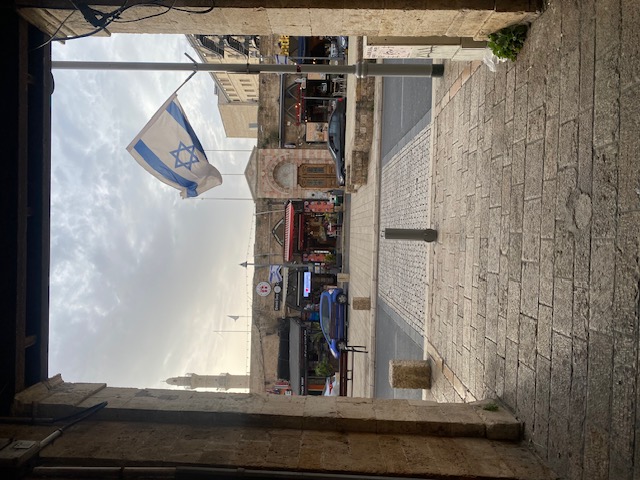
For Jews living in the diaspora, the Israeli flag is more than a state emblem; it represents a spiritual homeland and a unifying identity. Synagogues, community centers, and schools across the globe often display the Israeli flag to symbolize solidarity with Israel.
On Jewish holidays such as Yom Ha’atzmaut, Jewish communities worldwide organize parades, waving the Israeli flag as a celebration of independence and resilience.
Controversies and Debates About the Israeli Flag
Like all national symbols, the Israeli flag has also been a subject of political debate. Some groups see it as a symbol of pride and unity, while others criticize its exclusive representation of Jewish identity.
Despite this, the Israeli flag continues to be a unifying force for millions of people and remains central to Israel’s national and cultural identity.
The Israeli Flag in Ceremonies, Sports, and National Events
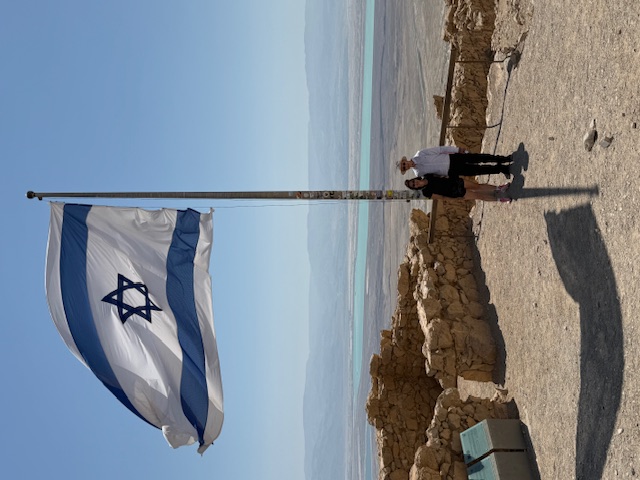
- Independence Day: Streets, buildings, and cars across Israel are decorated with the Israeli flag.
- Memorial Days: Flags are lowered to half-mast to honor fallen soldiers and victims of terror.
- Sporting Events: From the Olympics to soccer championships, the Israeli flag symbolizes national pride.
When traveling in Israel, visitors often encounter the flag at festivals, cultural events, and religious gatherings, where it serves as a poignant reminder of the country's identity and unity.
Global Presence of the Israeli Flag
The Israeli flag appears at United Nations assemblies, diplomatic missions, Jewish conferences, and international solidarity rallies. For Jewish communities worldwide, it is a symbol of connection to Israel, even when far from the land itself.
Visiting Israel to Explore the Story of the Flag
Traveling to Israel provides the best opportunity to connect with the story of the Israeli flag. At historic sites like the City of David, Masada, and the Western Wall, visitors can witness firsthand the living symbols of Jewish resilience that the flag represents.
FAQs About the Israeli Flag
1. When was the Israeli flag officially adopted? The Israeli flag was officially adopted on May 14, 1948, the day of the declaration of independence.
2. What does the Star of David on the Israeli flag symbolize? The Star of David represents Jewish identity, unity, and connection to faith.
3. Why are the stripes on the Israeli flag blue? They are inspired by the Tallit (Jewish prayer shawl), which traditionally has blue stripes, symbolizing holiness and God’s commandments.
4. What is the connection between the Israeli flag and the Bible? The blue color recalls the biblical light blue dye (Numbers 15:38-40), which was used in religious garments as a reminder of God’s presence.
5. Where can you see the largest Israeli flag? The largest Israeli flag was displayed at Masada, a historic fortress overlooking the Dead Sea, also the Ammunition Hill in Jerusalem.
6. Why is the Israeli flag important for Jewish communities abroad? It symbolizes a shared identity and spiritual homeland, connecting Jewish communities worldwide to Israel.
Conclusion
The Israeli flag is not just a national emblem—it is a powerful story of faith, resilience, and identity. Rooted in Jewish tradition and shaped by modern history, the Israeli flag continues to inspire people worldwide. Whether seen at international events, Jewish holidays, or waving proudly over Jerusalem, the flag connects past, present, and future.
To truly understand the Israeli flag, nothing compares to visiting Israel in person. A private guided tour allows you to explore its history, culture, and meaning in the very places where the Jewish story unfolded.
ORDER NOW!

SLAVA BAZARSKY
PHONE: +972 53 4779797
Tours in Israel
- 11 Days Jewish Heritage Tour through Israel
- 3-Day Israel Tour for Seniors - Walk Through the Bible
- 3-Day Jewish Heritage Tour of Israel: Unveiling the Rich Tapestry
- 4 Day Israel Tour Package for Seniors - Easy Individual Pace
- 5 Days Jewish Heritage Tour to Israel: A Journey Through History and Spirituality
- 5-Day Israel Private Tour Package For Seniors With Discounts
- 6-Days Israel Private Tour Package for Seniors
- 7 Day Jewish Heritage Tour to Israel: A Holistic Journey
- 7-Day Israel Tour for Seniors: Discovering History and Culture
- 9-Day Jewish Heritage Tour Through Israel
- Best Israel Tours for Seniors lead by #1 private tour guide
- Christian Holy Land Guided Tour of Israel 2026
- Classic Guided Israel Tour
- Holy Land Tours For Seniors From The USA With Price And Reviews
- ISRAEL: OFFICIAL TOURING ENTRY FOR FAMILIES, SMALL GROUPS COVID 19
- Jewish Heritage Guided Tour
- Volunteer and Solidarity Trips to Israel | 2026/2027 Mission Tours
Daily Tours in Israel
- BATTLE LEGACY TOUR
- Best 3-Day Negev Jeep Tour - Mystery of The Israeli Desert
- Best Eilat to Petra 1 Day Private Tour
- BETHLEHEM AND JERICHO PRIVATE DAY TOUR FROM JERUSALEM & TEL AVIV
- CALIBER 3 GUSH ETZION - ULTIMATE ISRAELI MILITARY ADVENTURE
- CHRISTIAN GALILEE TOUR
- CHRISTIAN JERUSALEM TOUR
- CITY OF DAVID AND UNDERGROUND JERUSALEM TOUR
- CLASSIC PRIVATE JERUSALEM TOUR
- Dead Sea and Masada Private Guide Day Tour, Reviews & Price
- Dead Sea and Masada Private Guided Tour for Seniors
- Dead Sea Relaxation Day Tour
- HAIFA, AKKO AND ROSH-HANIKRA TOUR
- Half Day Tour To Bethlehem From Jerusalem With A Local Guide
- Jerusalem Private Tour for Seniors with Cost & Reviews
- Jerusalem Rooftops And Walls Private Tour: History From A Different Angle
- JORDAN RIVER BAPTISM SITE TOUR
- Judean Desert Area Private Tour - Hiking and Off Road Jeep
- Kibbutz Beeri Solidarity Tour - Support and Volunteer
- Kibbutz Nir Oz Solidarity Tour - Witness October 7th Dark Events
- Levinsky Market Ultimate Tasting Private Tour
- Northern Israel Solidarity Tour: Kiryat Shmona, Kibbutzim & Golan Heights
- October 7th Gaza Envelope Memorial Tour from Tel Aviv | Bear Witness
- Private Tour to Nazareth and Capernaum for Seniors
- Private tours of Acre, Caesarea and Haifa from Tel Aviv Israel: Reviews, Price
- Private Tours of Jerusalem and Bethlehem from Tel Aviv Israel: Reviews, Price
- Private Vip Tour Of The Israel Diamond Exchange Center in Ramat Gan
- RAMAT GAN SAFARI PARK TOUR
- SAFED AND GOLAN HEIGHTS TOUR
- Senior-Friendly Private Tour of Caesarea and Haifa
- TEL AVIV AND JAFFA PRIVATE TOUR
- Tour of the Shephelah for Seniors: Beit Govrin, Maresha, Burma Road
- Touring Nova Music Festival Site, Sderot, The Burnt Cars Compound, And Other Sites Around Gaza Strip Following The 7.10.23 Hamas Attack