
Pilgrimage Road Jerusalem - New Archaeology at the City of David

Jerusalem Ancient Pilgrimage Road
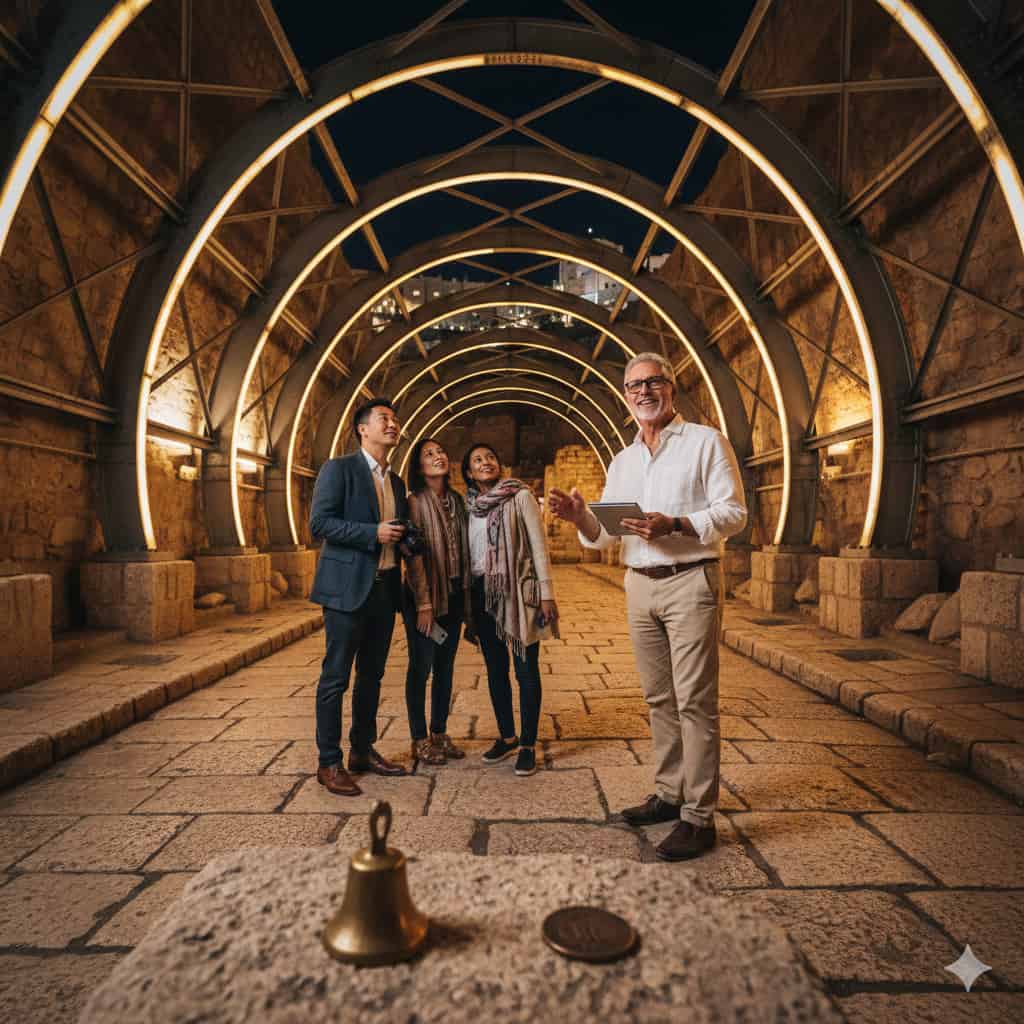
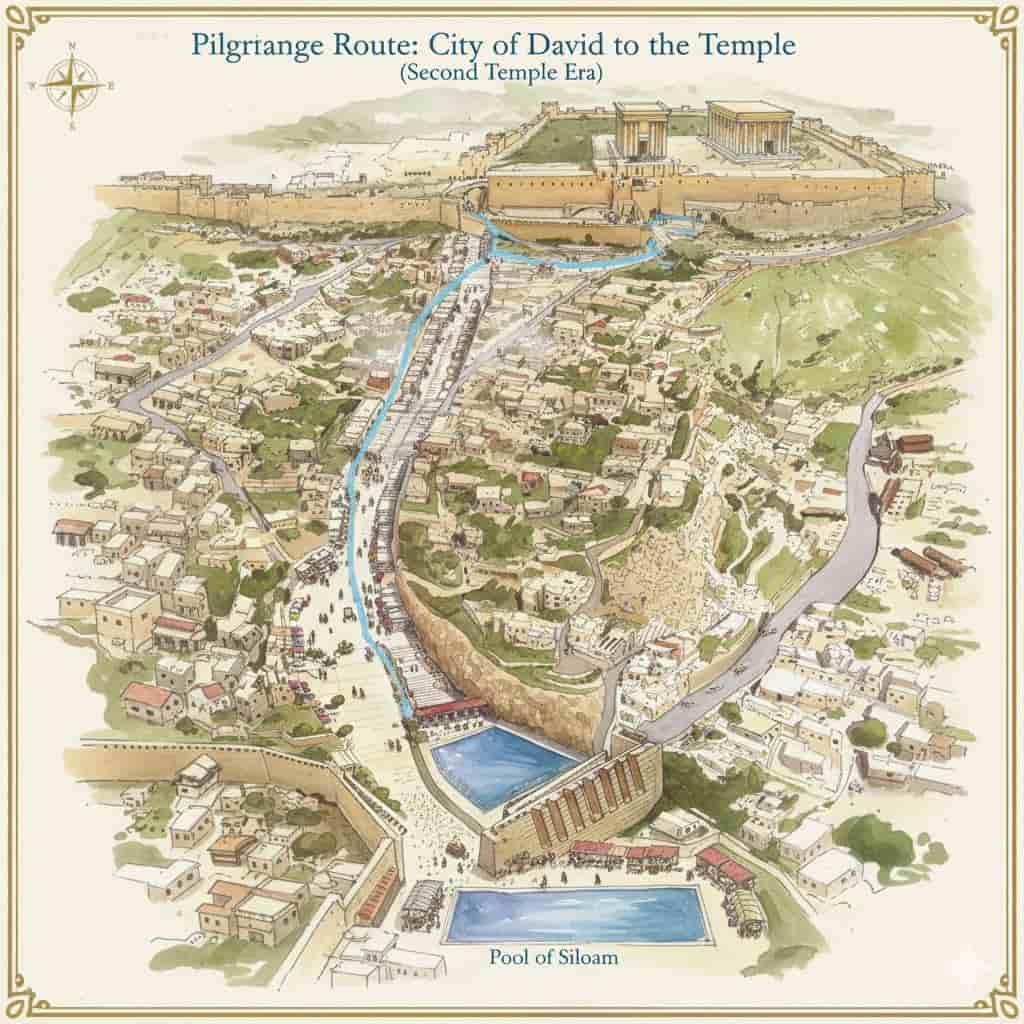
The Pilgrimage Road in the City of David was the "Champs-Élysées" of ancient Jerusalem. This 600 Meters long monumental late Second Temple period stepped street, excavated after a decade of complex engineering, allows you to walk the original stones from the Pool of Siloam to the Temple Mount, an exclusive, high-value archaeological experience.
Where the Earth Whispers Secrets of Jerusalem
In Jerusalem, history isn’t found in museums! It lives beneath your feet. Ten meters below the bustling modern streets of the City of David lies an engineering marvel: a monumental 600-meter-long, 8-meter-wide road built during the era of Roman Governor Pontius Pilate. This was no ordinary street, it was the spiritual and commercial "superhighway" of the holy city, the very path trodden by millions of pilgrims ascending to the Holy Temple.
A City in Motion: The Purpose of the Journey
Three times a year, during the Pilgrimage Festivals of Passover, Shavuot, and Sukkot (the Feast of Tabernacles), Jerusalem’s population would swell to nearly ten times its size. From across the Roman Empire, Jewish pilgrims arrived with a singular, profound purpose: to reach the final destination of the Temple Mount.
The Pilgrimage Road was the official "Gateway to the Divine," the physical transition from the mundane world to the sanctity of the House of God.
The Ancient Marketplace: What Life Looked Like Along the Road
As you walk these stones today, imagine the air thick with the scent of incense, roasted meats, and expensive spices. This road was a vibrant commercial hub, lined with bustling shops and stalls designed to cater to the needs of the fatigued traveler.
-
Essential Purchases: Pilgrims would stop to buy oil lamps for the evening, high-quality flour and wine for offerings, and perhaps a souvenir of their journey.
-
The Economy of Faith: This was where the "Temple Shekel" was king. Visitors exchanged their foreign Roman or Greek coins at the money-changers' stalls to pay the annual half-shekel temple tax.
-
Ritual Readiness: Along the route, massive stone vessels and ritual baths (mikva’ot) were available, ensuring that every person was spiritually prepared before reaching the southern wall and gates of the Temple.
The Climax of the Climb
The journey was a steady, physical ascent. Starting at the lowest point of the city, the Pool of Siloam( AKA Silwan), the road led the crowds upward through the heart of Jerusalem. The "Stepped Street" was designed with a specific rhythm: alternating long and short steps to prevent a hurried, disrespectful pace. As the pilgrims reached the Ophel and saw the massive white limestone walls of the Temple Mount towering above them, the climb culminated in an awe-inspiring vista of gold and marble, the spiritual peak of the ancient world.
Second Temple Period archaeology: How the archaeological Wonder Was Revealed
Uncovering the Pilgrims’ Road was not a standard excavation. It remains one of the most complex and daring archaeological feats ever undertaken in Israel. Because the road lies beneath existing residential homes of the old city, archaeologists had to "extract" history from the earth without disturbing the life above.
The "Hanging Excavation": An Engineering Feat
The excavation used a sophisticated "horizontal" tunneling method. Throughout a decade of work, massive steel constructions were installed to support the ceiling at every centimeter of progress. A complex conveyor system removed thousands of tons of earth, while above, modern Jerusalem continued its daily rhythm undisturbed.
The archaeologist behind the Discovery of ancient Jerusalem
The project was led by the Israel Antiquities Authority (IAA) and gathered Israel’s finest archaeological minds:
-
Nahshon Szanton & Moran Hagbi: The lead archaeologists who spearheaded the long-term exposure of the road and Gihon. Their analysis of coins and stratigraphy proved that the road’s construction was finalized during the Roman Governors' era.
-
Dr. Joe Uziel: A renowned archaeologist who added significant layers to our understanding of daily life through the small artifacts found along the path and the Temple Mount.
-
Prof. Ronny Reich & Eli Shukron: The pioneers who discovered the adjacent drainage channel in 2007, providing the "starting thread" that led to the discovery of the entire monumental street.
Treasures from the Dust: Significant Archaeological Discoveries
The excavation of the entire length of the Pilgrimage Road has yielded significant archaeological discoveries that offer an unflinching look at life in the first century. Within the ancient drainage channel running beneath the street, researchers found a time capsule of Jerusalem’s final, defiant moments: hundreds of bronze coins from the Great Revolt, minted by Jewish rebels with the inscription "For the Freedom of Zion."
As you walk along this road, the remnants of daily life are everywhere, from delicate oil lamps that once lit the way for pilgrims arriving for the Feast of Tabernacles, to meticulously carved ritual baths (mikva’ot) used for purification. One particularly poignant find was a soot-stained lamp discovered near the Ophel, suggesting the desperate hiding places of residents during the city's fall. Today, as this path becomes the crown jewel of the archaeological park, these artifacts transform the stones from a silent ruin into a vivid, breathing chronicle of ancient Judea.
Curated Highlights of the Path
-
The Pool of Siloam: The starting point where pilgrims performed ritual purification before their ascent.
-
Imperial Pavement: Walking on original, massive stone slabs, precision-cut and laid 2,000 years ago, reflecting the immense wealth of Second Temple Jerusalem.
-
The Drainage Tunnels & The Great Revolt: The site where cooking pots and swords were found, a chilling, silent testimony to the final days of the Jewish rebels in 70 CE.
In the Footsteps of the Pilgrim - The Christian Aspect
For the Christian pilgrim, the opening of the Pilgrimage Road is nothing short of a "Fifth Gospel" carved in stone. This is not merely an archaeological site, it is a hallowed corridor where the biblical narrative transitions from text to tactile reality.
-
The Messiah’s Path to the Temple: As the primary ceremonial artery of Jerusalem, these authentic Herodian first-century stones are almost certainly the very ones Jesus walked during his festival ascents. Walking this path allows you to mirror his physical journey toward the House of God.
-
Siloam Pool Miracle: The place where Jesus healed the blind man is one of the most evocative miracles in the New Testament. It was here that the man born blind washed away the clay at Jesus' command. As we ascend from the pool, the miracle feels less like a distant story and more like a local event that happened right where you stand.
-
The Commerce of the Holy: Along this grand thoroughfare, the bustling shops and money-changers once lined the way. This vibrant commercial atmosphere provides the visceral context for the Cleansing of the Temple, offering a glimpse into the world Jesus encountered as he challenged the religious status quo.
-
The Stone of the Orator: One of the most striking finds is a unique, stepped stone podium. Standing before this ancient preaching stand, one can easily visualize a teacher addressing the masses.
Pro Tips for the Discerning Traveler
-
The Golden Hour: I recommend scheduling your City of David archaeological tour for the early morning (08:30 AM) to experience the site at its most tranquil and avoid crowds.
-
Photography: The site offers dramatic lighting between the steel arches and ancient stones.
-
What to Wear: Though underground and covered, the temperature is stable, but humidity can be high. I recommend elegant yet comfortable walking shoes, as you are walking on authentic history, and it is not always level.
FAQ
Is the Pilgrim's Road fully open to the public? Yes! The ancient road is being fully opened. On a private tour, we manage the precise coordination required to ensure a seamless and professional passage through the newly opened sections.
How long does the tour take? An in-depth tour takes approximately two hours. It is best combined with a full-day exploration of the Jewish Quarter and the Western Wall.
Is the underground route safe? Absolutely. The site is maintained to the highest international engineering standards, featuring constant monitoring and structural support by the IAA.
Book Your Private Guided Tour of Jerusalem to the Pilgrims’ Road and pave your road to the Temple Mount
ORDER NOW!

SLAVA BAZARSKY
PHONE: +972 53 4779797
Tours in Israel
- 11 Days Jewish Heritage Tour through Israel
- 3-Day Israel Tour for Seniors - Walk Through the Bible
- 3-Day Jewish Heritage Tour of Israel: Unveiling the Rich Tapestry
- 4 Day Israel Tour Package for Seniors - Easy Individual Pace
- 5 Days Jewish Heritage Tour to Israel: A Journey Through History and Spirituality
- 5-Day Israel Private Tour Package For Seniors With Discounts
- 6-Days Israel Private Tour Package for Seniors
- 7 Day Jewish Heritage Tour to Israel: A Holistic Journey
- 7-Day Israel Tour for Seniors: Discovering History and Culture
- 9-Day Jewish Heritage Tour Through Israel
- Best Israel Tours for Seniors lead by #1 private tour guide
- Christian Holy Land Guided Tour of Israel 2026
- Classic Guided Israel Tour
- Holy Land Tours For Seniors From The USA With Price And Reviews
- ISRAEL: OFFICIAL TOURING ENTRY FOR FAMILIES, SMALL GROUPS COVID 19
- Jewish Heritage Guided Tour
- Volunteer and Solidarity Trips to Israel | 2026/2027 Mission Tours
Daily Tours in Israel
- BATTLE LEGACY TOUR
- Best 3-Day Negev Jeep Tour - Mystery of The Israeli Desert
- Best Eilat to Petra 1 Day Private Tour
- BETHLEHEM AND JERICHO PRIVATE DAY TOUR FROM JERUSALEM & TEL AVIV
- CALIBER 3 GUSH ETZION - ULTIMATE ISRAELI MILITARY ADVENTURE
- CHRISTIAN GALILEE TOUR
- CHRISTIAN JERUSALEM TOUR
- CITY OF DAVID AND UNDERGROUND JERUSALEM TOUR
- CLASSIC PRIVATE JERUSALEM TOUR
- Dead Sea and Masada Private Guide Day Tour, Reviews & Price
- Dead Sea and Masada Private Guided Tour for Seniors
- Dead Sea Relaxation Day Tour
- HAIFA, AKKO AND ROSH-HANIKRA TOUR
- Half Day Tour To Bethlehem From Jerusalem With A Local Guide
- Jerusalem Private Tour for Seniors with Cost & Reviews
- Jerusalem Rooftops And Walls Private Tour: History From A Different Angle
- JORDAN RIVER BAPTISM SITE TOUR
- Judean Desert Area Private Tour - Hiking and Off Road Jeep
- Kibbutz Beeri Solidarity Tour - Support and Volunteer
- Kibbutz Nir Oz Solidarity Tour - Witness October 7th Dark Events
- Levinsky Market Ultimate Tasting Private Tour
- Northern Israel Solidarity Tour: Kiryat Shmona, Kibbutzim & Golan Heights
- October 7th Gaza Envelope Memorial Tour from Tel Aviv | Bear Witness
- Private Tour to Nazareth and Capernaum for Seniors
- Private tours of Acre, Caesarea and Haifa from Tel Aviv Israel: Reviews, Price
- Private Tours of Jerusalem and Bethlehem from Tel Aviv Israel: Reviews, Price
- Private Vip Tour Of The Israel Diamond Exchange Center in Ramat Gan
- RAMAT GAN SAFARI PARK TOUR
- SAFED AND GOLAN HEIGHTS TOUR
- Senior-Friendly Private Tour of Caesarea and Haifa
- TEL AVIV AND JAFFA PRIVATE TOUR
- Tour of the Shephelah for Seniors: Beit Govrin, Maresha, Burma Road
- Touring Nova Music Festival Site, Sderot, The Burnt Cars Compound, And Other Sites Around Gaza Strip Following The 7.10.23 Hamas Attack